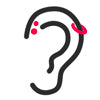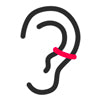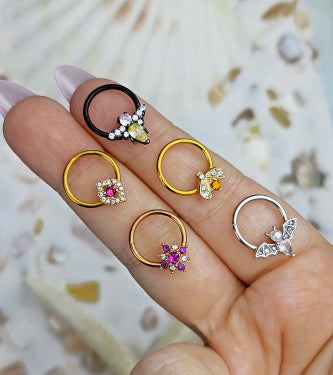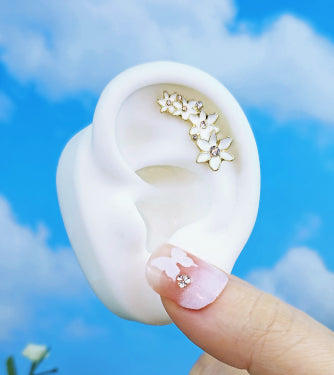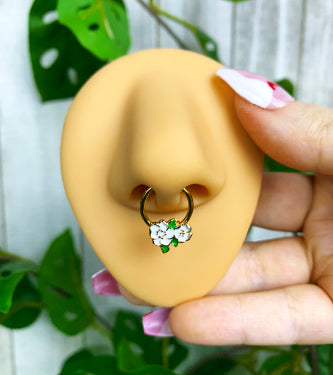
The conch is the ear's center stage the shell of cartilage that fits a flush flat back stud or the dramatic full hoop that wraps the whole ear. Both live here, mostly in the 16G standard, in surgical steel and titanium. Stud for subtle, hoop for statement; collect both moods. Since 1999.
Most conch jewelry runs 16G (some wear 14G match yours). The real decision is stud or hoop: a flat back labret sits flush on the shell (sleep friendly, headphone friendly); a conch hoop needs enough diameter to clear the ear's rim, 1/2" to5/8" is typical, which is why conch hoops run bigger than other cartilage rings.
Honest timing note: conch cartilage is a slow healer 3 to 9 months,often 6+. Studs first, hoops after your piercer clears you; a hoop on a healing conch is how irritation bumps happen.
Most conch piercings wear 16G jewelry that's the bulk of this collection though some are pierced at 14G. Match the gauge you're wearing now; every product page lists it.
Bigger than you'd guess: the hoop has to clear the rim of your ear, so 1/2" to 5/8" diameters are the conch standard. Measure an existing hoop that fits, or start at 1/2" and size by look.
The stud (a flat back labret) is the everyday pick: flush, snag-free, fine with headphones and pillows. The hoop is the showpiece. Most conch owners keep one of each and swap by mood that's the whole fun of a healed conch.
With a flat back stud, healed conches generally handle side sleeping fine the disc is flush. Hoops press more; if you're a dedicated side sleeper, keep the hoop for daytime. A healing conch, though, wants no pressure at all.
After healing conch cartilage takes 3 to 9 months, often 6 or more. Your starter stud stays until the piercer gives the nod; the hoop is the graduation gift.
Mostly 316L surgical steel, with anodized titanium colors and implant-grade titanium picks. Sensitive ears: go titanium nickel free. Materials are on every product page.