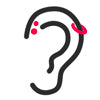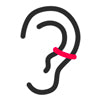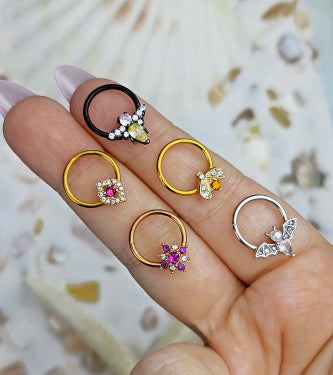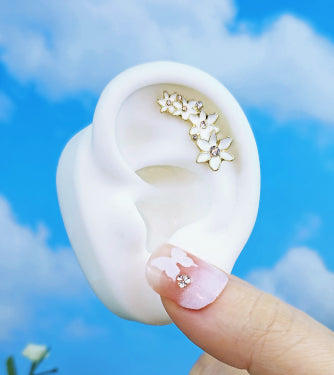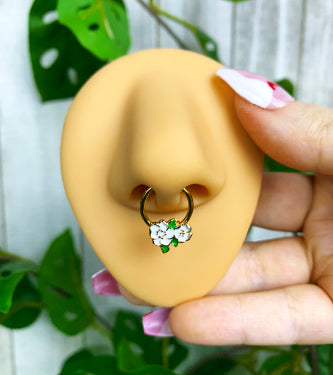
The upper rim of your ear is prime stacking territory, and this is its wardrobe: flush flat back studs, snug hinged hoops, seamless rings, and double-hoop looks in titanium and surgical steel, 16G to 20G. One helix is a statement; a stacked run is a lifestyle. Since 1999.
Helix sizing spans more than most spots: 16G is the cartilage classic, but plenty of helixes are pierced at 18G or 20G match your jewelry, not the internet. Hoop diameters run 5/16" (snug hug) to 3/8" (a little air); stud posts 1/4"–5/16". Every product page lists the numbers.
Style strategy for the rim: flat backs for the piercings you sleep on, hinged hoops for the ones you show off (one-handed changes matter at that angle), and seamless rings for the cleanest minimal stack. Mixing all three up one ear is not a crime; it's the assignment.
Usually 16G (the cartilage standard), but 18G and 20G helixes are common too, needle choice varies by piercer. Match the jewelry you're wearing now; forcing a thicker post through a finer channel is never the move.
5/16" hugs the rim closely; 3/8" adds a little daylight. Thicker rims and lower placements take the larger size. If your current hoop drapes right, buy its diameter it's listed on every product page.
Flat back studs win for sleeping, helmets, and headphones; hoops win the mirror. Stacked ears usually alternate: hoops on show positions, studs where your pillow lands. Healed helixes swap in seconds, so collect both.
Cartilage patience: 3 to 9 months or more, and it heals in moods. The starter stays until your piercer clears you — then the stacking begins.
On a healed helix with a flat back stud, most people can. Hoops press more. On a healing helix: don't pressure is the main reason cartilage piercings get irritation bumps.
Titanium for sensitive ears (nickel-free), surgical steel for the daily rotation, gold for the hero pieces. Helix jewelry lives in 24/7, so material earns its money up there.